Stone
Stone
The first thing you notice is the cold.
The way it holds the air at a temperature the outside world isn't responsible for. Then the light, arriving at angles that don't quite make sense, broken apart by glass into colours that land on the floor and walls like something spilled rather than planned. Then the smell. Incense, old wood, a mineral note underneath both. And then, if you're lucky, the organ.
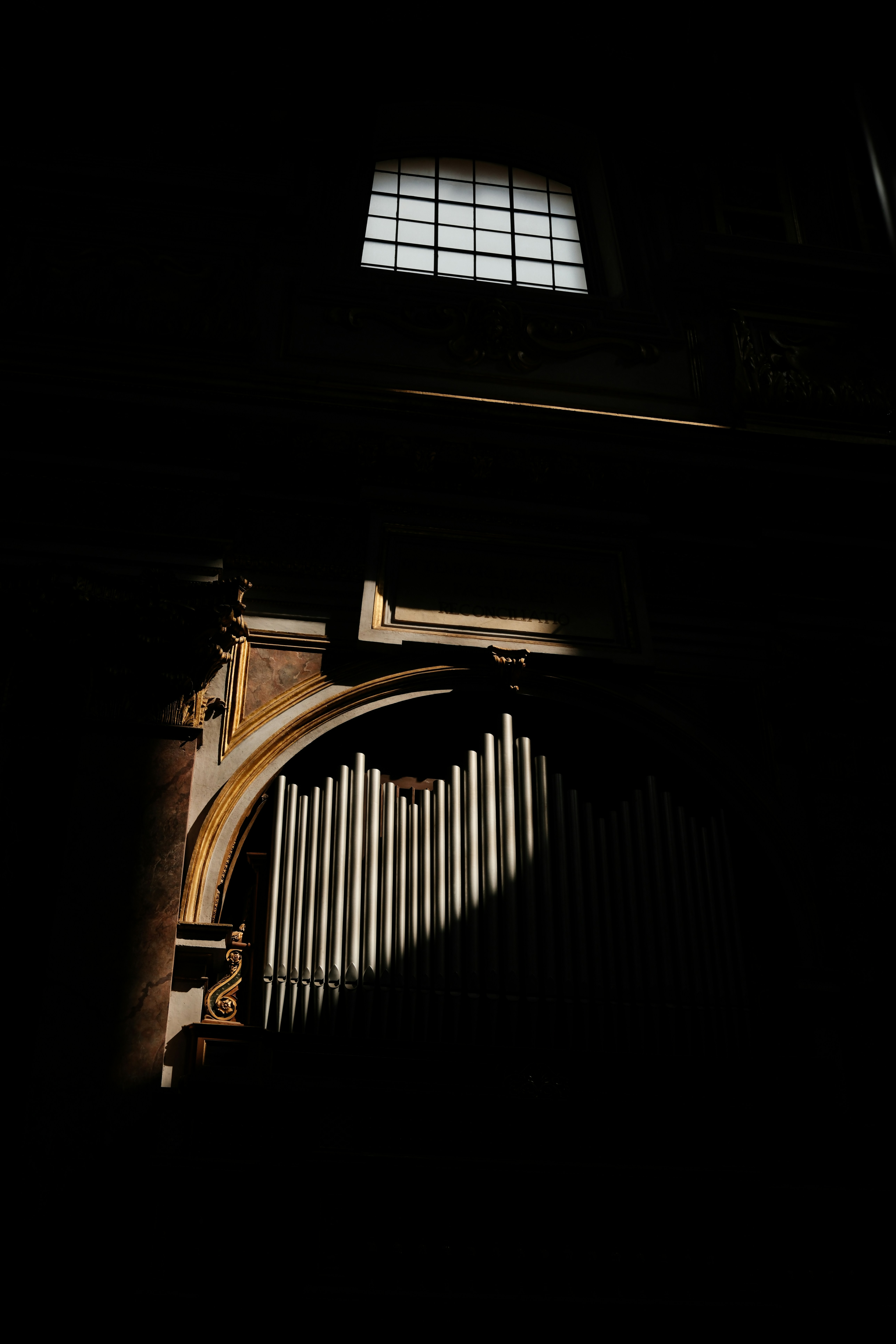
It doesn't begin gradually. It fills the room through the architecture like the building itself has drawn a breath. The sound doesn't come from a single point. It comes from everywhere, pressing into the stone, travelling through the floor, reaching you before you've had time to decide how you feel about it.
Your body adjusts before your mind does.
People visit these places for all kinds of reasons. Many come without any particular belief, as travellers, as people drawn to history or architecture, or simply because they found themselves inside on a rainy afternoon. And still, it happens anyway. A quieting. A shift in pace. The instinct to lower your voice without anyone asking.
It isn't about faith. Or not only. The experience arrives regardless of what you brought in with you.
Which raises the question worth sitting with: what's doing the work?
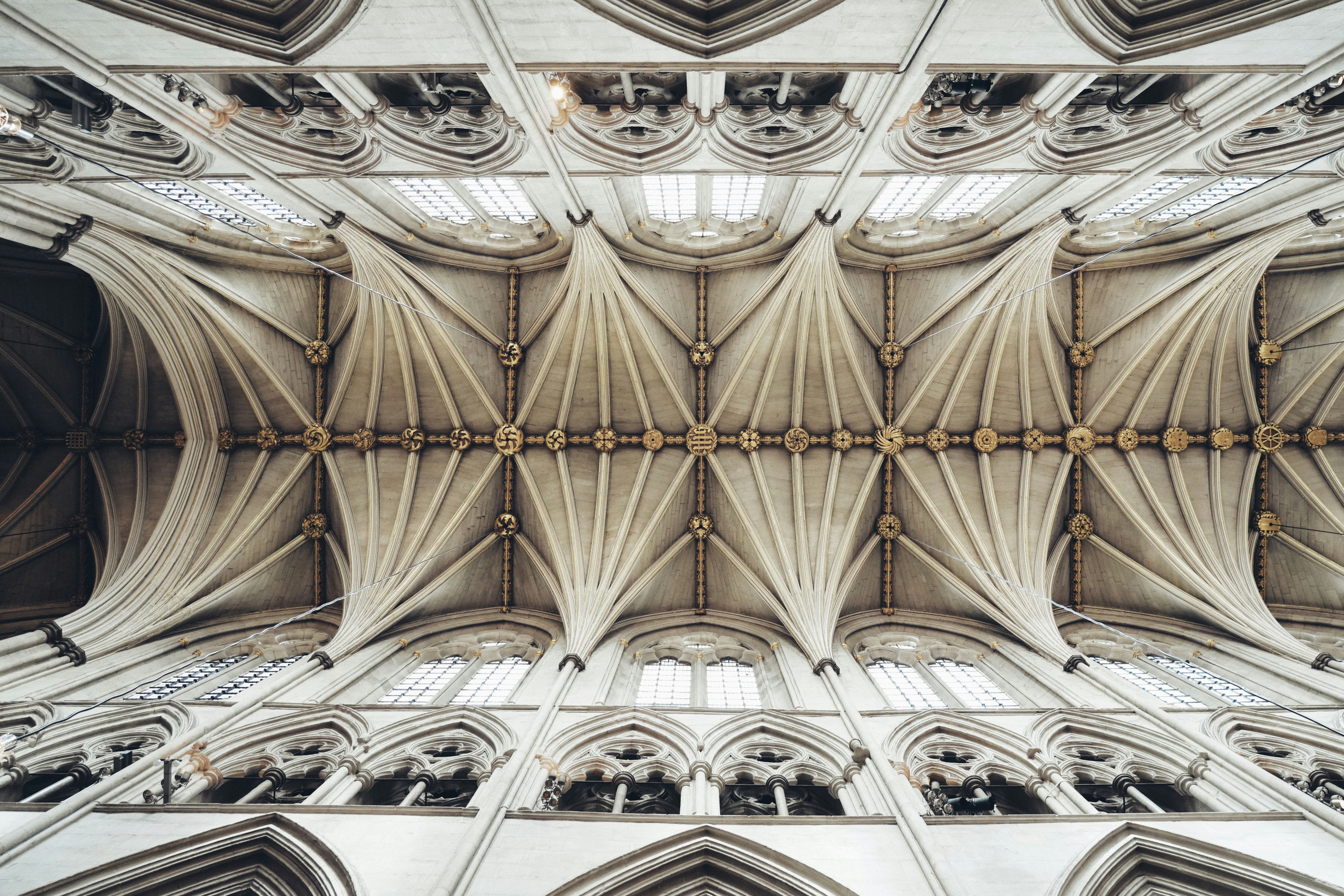
Start with the form. The pointed arch pulls the eye upward before the mind decides where to look. The verticality is excessive by any practical measure. Ceilings higher than they need to be. Walls extending beyond what function requires. The nave stretching into a depth that makes the far end seem to recede as you approach it.
None of this is accidental.
These proportions were tested, refined and debated over generations because they produce something specific in the body. You're not meant to feel contained. You're meant to feel placed.
Then there's the light. Filtered through centuries of coloured glass, arriving already changed. Amber, cobalt and deep rose falling where no one planned for them to fall. Shadows collecting behind plinths and columns in ways that shift as the day moves. The eye can't fully resolve the space. Something is always just outside of clarity.
Then the material itself. Stone behaves differently to almost anything else we build with. It doesn't absorb sound. It carries it. Lets it travel the full length of the room, allows it to linger past where it should have faded, turns a single note into a presence that keeps filling the negative space long after the instrument has stopped.
But underneath is a harder thing to name. And maybe more powerful.
These buildings were made by hand. Over decades, sometimes across generations, by people who understood they would never see them completed.
The stonemason cutting detail into a capital sixty feet off the ground, detail no one at ground level would ever fully see, wasn't performing for an audience. The glazier mixing pigments to achieve a specific quality of transmitted light was solving a problem that had no precedent. The builders working without the tools we now consider basic were operating at the absolute edge of what their moment in history made possible.
What you're standing inside isn't just a building. It's accumulated patience. Skill passed down and refined. Intent applied across lifetimes.
There's a density to spaces built with that kind of intention. A weight ordinary construction rarely carries. You feel it instinctively.
You feel small. But not diminished. More like you've been correctly proportioned to something larger than yourself.
And then there are the quieter layers working underneath. The symbolism embedded in the structure, the geometry, the repetition of particular forms, lands on people who couldn't name what they're responding to. The history accumulated in certain places pulls the imagination toward every person who stood there before.
That's what these environments do at their most precise. They operate on more registers than you can consciously account for. Some of it you feel in the body. Some of it works in the mind. Some of it moves through the imagination into somewhere harder to locate.
And maybe that's why the experience lingers.
Gallery
The first thing you notice is the cold.
The way it holds the air at a temperature the outside world isn't responsible for. Then the light, arriving at angles that don't quite make sense, broken apart by glass into colours that land on the floor and walls like something spilled rather than planned. Then the smell. Incense, old wood, a mineral note underneath both. And then, if you're lucky, the organ.
It doesn't begin gradually. It fills the room through the architecture like the building itself has drawn a breath. The sound doesn't come from a single point. It comes from everywhere, pressing into the stone, travelling through the floor, reaching you before you've had time to decide how you feel about it.
Your body adjusts before your mind does.
People visit these places for all kinds of reasons. Many come without any particular belief, as travellers, as people drawn to history or architecture, or simply because they found themselves inside on a rainy afternoon. And still, it happens anyway. A quieting. A shift in pace. The instinct to lower your voice without anyone asking.
It isn't about faith. Or not only. The experience arrives regardless of what you brought in with you.
Which raises the question worth sitting with: what's doing the work?
Start with the form. The pointed arch pulls the eye upward before the mind decides where to look. The verticality is excessive by any practical measure. Ceilings higher than they need to be. Walls extending beyond what function requires. The nave stretching into a depth that makes the far end seem to recede as you approach it.
None of this is accidental.
These proportions were tested, refined and debated over generations because they produce something specific in the body. You're not meant to feel contained. You're meant to feel placed.
Then there's the light. Filtered through centuries of coloured glass, arriving already changed. Amber, cobalt and deep rose falling where no one planned for them to fall. Shadows collecting behind plinths and columns in ways that shift as the day moves. The eye can't fully resolve the space. Something is always just outside of clarity.
Then the material itself. Stone behaves differently to almost anything else we build with. It doesn't absorb sound. It carries it. Lets it travel the full length of the room, allows it to linger past where it should have faded, turns a single note into a presence that keeps filling the negative space long after the instrument has stopped.
But underneath is a harder thing to name. And maybe more powerful.
These buildings were made by hand. Over decades, sometimes across generations, by people who understood they would never see them completed.
The stonemason cutting detail into a capital sixty feet off the ground, detail no one at ground level would ever fully see, wasn't performing for an audience. The glazier mixing pigments to achieve a specific quality of transmitted light was solving a problem that had no precedent. The builders working without the tools we now consider basic were operating at the absolute edge of what their moment in history made possible.
What you're standing inside isn't just a building. It's accumulated patience. Skill passed down and refined. Intent applied across lifetimes.
There's a density to spaces built with that kind of intention. A weight ordinary construction rarely carries. You feel it instinctively.
You feel small. But not diminished. More like you've been correctly proportioned to something larger than yourself.
And then there are the quieter layers working underneath. The symbolism embedded in the structure, the geometry, the repetition of particular forms, lands on people who couldn't name what they're responding to. The history accumulated in certain places pulls the imagination toward every person who stood there before.
That's what these environments do at their most precise. They operate on more registers than you can consciously account for. Some of it you feel in the body. Some of it works in the mind. Some of it moves through the imagination into somewhere harder to locate.
And maybe that's why the experience lingers.
Gallery